In the evenings after work as a program manager at the Sonoma Resource Conservation District, I would head into the yard behind the red house I shared with Onna. It was our first place together after moving to California, tucked into the Luther Burbank neighborhood in Santa Rosa, where the lessons of the day could settle and the garden could show me what needed to be done.
I had finished my master’s degree and taken the job to gain real-world experience before deciding whether to pursue a PhD. My work focused on the intersection between private land ownership, including vineyards and dairyland, and natural resources like water quality and fish habitat. That year helped me see how conservation and agriculture played out beyond the college campus. In the garden, I returned to a practice I had learned abroad, training tomatoes to grow vertically and pruning them with care. It was a way of adapting past experiences while testing how those lessons held up in a new place.
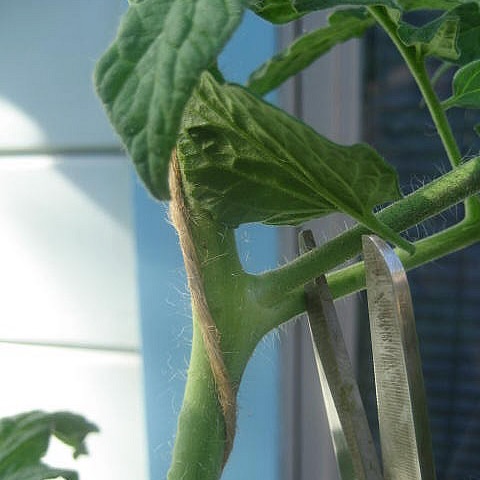
That summer in 2007, I grew indeterminate tomatoes, vigorous and unruly if left unchecked. I trained them upward, tying the dominant shoot to twine and pruning the side shoots that emerged from buds between the leaf and stem. These were healthy shoots, full of potential, but I removed them. Not because they were wrong, but because they were not the direction the plant needed to grow.
There is something meaningful about pruning a plant. Sometimes you cut away what is damaged, but more often, you remove something alive, something that could thrive. Without guidance, growth turns to sprawl or collapse. The choice to prune is the choice to shape. That season gave me space to reflect. It helped me see the difference between more and better. It taught me that growth requires intervention and consistency. This was an insight I carried forward as I began shaping my path in agriculture and leadership.
We often talk about freedom in life. The freedom to explore, to try, to branch out. But we rarely talk about the discipline it takes to grow well. In every garden, and on every farm, time is limited. The season will end. The sun will set. And in life too, your energy, like the nutrients in the soil, is not infinite. So you choose.
You choose what to support and what to let go. You train your stem. You remove your side shoots. Each one had potential, but they were not part of the structure you were shaping. Sometimes the hardest decisions involve letting go of a version of yourself that might have succeeded. But would it have borne fruit?
Whether in a garden, on a farm, or in life, you have to find the balance between what you choose to nurture and what you choose to release, because time, energy, and seasons do not last forever.
What This Taught Me
It took me a while to learn that leadership is not about being the biggest or most impressive presence in your field. It is about direction, discipline, and clarity. That is what pruning teaches. Each shoot you remove is a decision made with intention. Each dominant shoot you tie to the twine is a commitment to a clear structure and a set of priorities you trust will bear fruit in time.
If you want to grow something meaningful, whether in a garden, a farm, or a career, you have to prune. You have to train. And you have to trust that even as you cut something away, you are making room for something deeper to grow.
Let’s Keep the Conversation Going
What is one priority you want to honor, even if you have to give up something else?
I’d love to hear from you. Join the conversation on LinkedIn.